The purpose of the ROV segment of the expedition is primarily educational outreach.
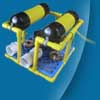
The ROV project is self-funded and budget is very limited. The individuals involved have very little previous experience at ROV design/operation. The goal is to use off-the-shelf technology but in perhaps novel ways in order to build and operate an observation class ROV. The system is to have certain restrictions & limitations. It must be 12 to 18 VDC power. Must be entirely digital with exception of power supply. Must include navigation instrumentation (compass, depth, speed). Must be able to make water quality observations (pH, temp, salinity/conductivity, DO). Must be able to take water/sediment samples. Simple enough, right....

The idea is to design an unit that would operate at something above the level of the typical camera & analog ROV units currently offered as school projects. The unit should be affordable to the average highschool/ junior college science budget, within the technical abilities of this age group and education level, challenging but not impossible.
The design and build team was selected intentionally with limited experience in order to evaluate the provess as to age/experience appropriateness and feasibility.
We have been fortunate in that we have gathered almost all the necessary components and found reliable sources for everything that we need with few exceptions.
What we are looking for now is a means to track the unit while it is in the water. This is usually done via an Acoustic Tracking System such as a SBL or USBL system and possibally coupled with a surface GPS system.. The current market price for such a unit is way out of our target budget.
I am soliciting ideas for alternative (and affordable) tracking systems.
Any Ideas?
Thanks
Ron sends

 :