Pool ROVer
Posted: Sep 3rd, 2011, 12:55 pm
Hello,
Our ROV started as a solution to an annoying problem:
Kids leave toys at the bottom of the pool. Scooping them out one at a time with the skimmer is boring and tedious.
Solution:
Build a ROV that can scoop them up faster, more efficiently and much more enjoyably!
Here is what we (my 5 year old daughter and I) have created. I call it the Pool ROVer:

The basis for our rov came from Steve and his "A Little Sneak Peek..." rov:
viewtopic.php?f=18&t=74
The primary design goal was to build a self contained rov that didn't require a computer, video monitor, power supplies, etc. I think we met this goal. All power and control electronics reside in a water resistant food storage box above the water. The only wire to trip over is the tether between the rov and this box.
The frame is constructed of 1/2" schedule 40 PVC. The dimensions are 10" wide x 10" tall x 12" long. The buoyancy tubes are 2" pvc and extend about 1" above the top of the frame. The three thrusters are Johnson bilge pump cartridges with Traxxas RC boat props. The plastic netting around the frame allows us to "drive" around on the bottom of the pool and scoop up the toys.
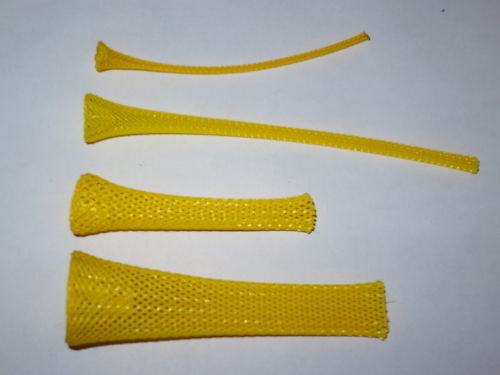
The tether consists of three 18 awg speaker wires (one per thruster) covered with yellow techflex. Buoyancy is accomplished with 2" sections of pipe insulation wire tied at 1.5' intervals. The overall length of the tether is approximately 30'.
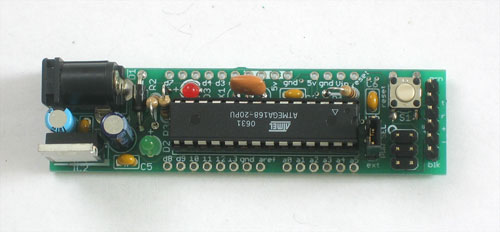
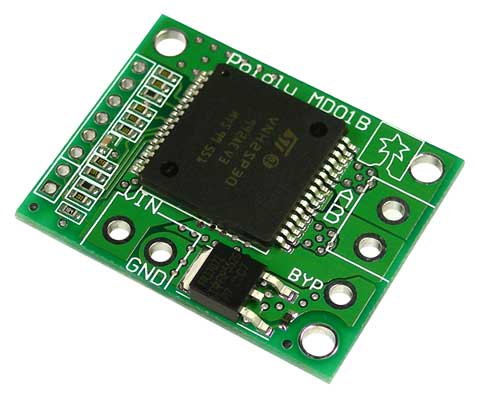
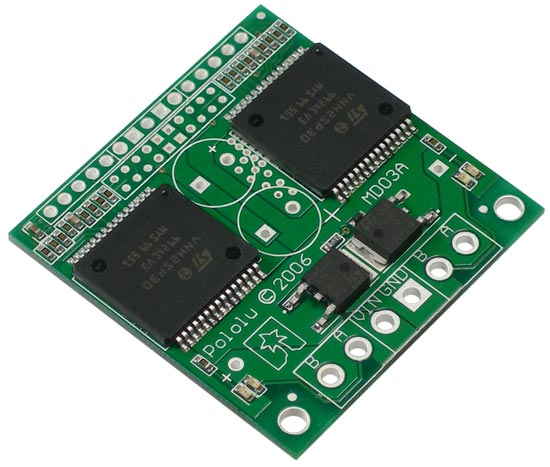
I'm most proud of the controller. The rov is controlled with a wireless Wii classic controller. This allows us to roam around the pool and drive the rov without tripping over wires. The controller's wireless receiver is connected to an Arduino which handles all of the motor control, controller initialisation and fault detection. Three 9 A motor drivers allow proportion, bi-directional control of each motor. Power comes from an internal 3 cell Lipo or an optional external 12 V UPS battery (for longer missions).
Finally, the ROVer is equipped with a video camera and light so we can watch our pool cleaning "missions" afterwards. The video is recorded on a micro SD card in the camera, so we don't get live video while we are operating the rov. Since we are using this in a 8-9' deep pool with crystal clear water, lack of live video isn't an issue.
Below you will find more detailed information about each of the major systems for the rov.
I'd like to add that this website made our project possible. Without all of the user contributions in this forum as well as the detailed information from Steve on the main site, we never would have been this successful this quickly.
THANK YOU!
Our ROV started as a solution to an annoying problem:
Kids leave toys at the bottom of the pool. Scooping them out one at a time with the skimmer is boring and tedious.
Solution:
Build a ROV that can scoop them up faster, more efficiently and much more enjoyably!
Here is what we (my 5 year old daughter and I) have created. I call it the Pool ROVer:
The basis for our rov came from Steve and his "A Little Sneak Peek..." rov:
viewtopic.php?f=18&t=74
The primary design goal was to build a self contained rov that didn't require a computer, video monitor, power supplies, etc. I think we met this goal. All power and control electronics reside in a water resistant food storage box above the water. The only wire to trip over is the tether between the rov and this box.
The frame is constructed of 1/2" schedule 40 PVC. The dimensions are 10" wide x 10" tall x 12" long. The buoyancy tubes are 2" pvc and extend about 1" above the top of the frame. The three thrusters are Johnson bilge pump cartridges with Traxxas RC boat props. The plastic netting around the frame allows us to "drive" around on the bottom of the pool and scoop up the toys.
The tether consists of three 18 awg speaker wires (one per thruster) covered with yellow techflex. Buoyancy is accomplished with 2" sections of pipe insulation wire tied at 1.5' intervals. The overall length of the tether is approximately 30'.
I'm most proud of the controller. The rov is controlled with a wireless Wii classic controller. This allows us to roam around the pool and drive the rov without tripping over wires. The controller's wireless receiver is connected to an Arduino which handles all of the motor control, controller initialisation and fault detection. Three 9 A motor drivers allow proportion, bi-directional control of each motor. Power comes from an internal 3 cell Lipo or an optional external 12 V UPS battery (for longer missions).
Finally, the ROVer is equipped with a video camera and light so we can watch our pool cleaning "missions" afterwards. The video is recorded on a micro SD card in the camera, so we don't get live video while we are operating the rov. Since we are using this in a 8-9' deep pool with crystal clear water, lack of live video isn't an issue.
Below you will find more detailed information about each of the major systems for the rov.
I'd like to add that this website made our project possible. Without all of the user contributions in this forum as well as the detailed information from Steve on the main site, we never would have been this successful this quickly.
THANK YOU!