The breakdown:
PVC Hull
Modified bilge pumps x 3
LG CCTV 480TVL camera
RC Plane 4CH controller and receiver
RC boat brushed ESC x 3 (boat ESC's have reverse, most car ESC's don't)
MR16 style LED in 6500K from Color Kinetics
MR16 submergible fixture
325ft neutrally buoyant tether with reel
Laptop for viewing/recording video topside
Power inverter 120VAC/12VDC
Design Theory:
Most of my design is standard issue, PVC, modded bilge pumps, etc. So I'll get to what might be a bit more interesting. Starting from topside I have 2 12V batteries on the boat powering a DC->AC converter which makes 120VAC. I send 120VAC down the line because 12VDC across the 325ft tether means voltage drop like crazy. And this way, no voltage issues and no dead batteries. Control is from topside via 4CH RC plane transmitter.
On the other end of the tether is the ROV and a switch mode power supply giving me 12DC again from the 120VAC. 12VDC runs everything on board including motors, lights, sensors, and camera. I have three ESCs (electronic speed control) one each for port, starboard, and dive/surface. This gives me up, dwn, fwd, rev, left, right, and pivot on center. The ESC's also give proportional control instead of just on/off. The control signal for the ESCs is PWM and comes the RF receiver. Also on board the ROV are flood sensors with two LED indicators. One on the junction/control box and the other is near the camera lens. In a flood event both LED's illuminate, indicating a bummer. The LED near the camera lens, but out of frame will light up the video screen topside with RED YOU'RE DEAD!
Camera is pretty simple, 12V in, video out and up tether. Lighting is done by LED and is at 6500K for a very cool look, and only draws 500mA. Instead of 3-6A of a standard MR16 lamp. This leaves plenty of headspace on the power supply for those hungry bilge pump motors.
The tether consists of three separate cables and a buoyancy strip of round foam insulation. One small flexible coax for video, one 18gauge pair for 120VAC, and a small 22gauge wire for the RF transmission through the water. For those laughing about me sending RC plane controller RF through the water, thats what the 22gauge wire is for, and so far it works. To 70ft so far anyway, so I'm keeping my fingers crossed to 300ft!
A few things I learned from the first build was really trying to control weight and volume because of the adverse effects this has on agility in the water. Making it as neutrally buoyant possible from the start WITHOUT adding weight for added agility. Keeping everything as modular as possible for repairability and so changing an aspect are part doesn't require a complete redesign. Thats what started the second design in the first place! I can remove the camera, powerhead, and junction box from the frame and make changes very easily. Also, the camera and powerhead will slide forwards and backwards by hand to adjust trim. The tether is removed with the lid off the control box to allow separation and also to inspect for any leaks post dive. Connections are made for the tether inside the control box and the lid is installed with wings nuts for easy set up/tear down.
The Future:
If all goes well and I make it to 300ft, I'm going to make some improvements. Starting with a HD network camera, more sensors (water temp, depth, etc) and an Arduino with an ethernet shield to do control and send everything topside by ethernet. I'll hopefully replace the RC plane controller with a PlayStation controller as well.
I'll be back with more later!
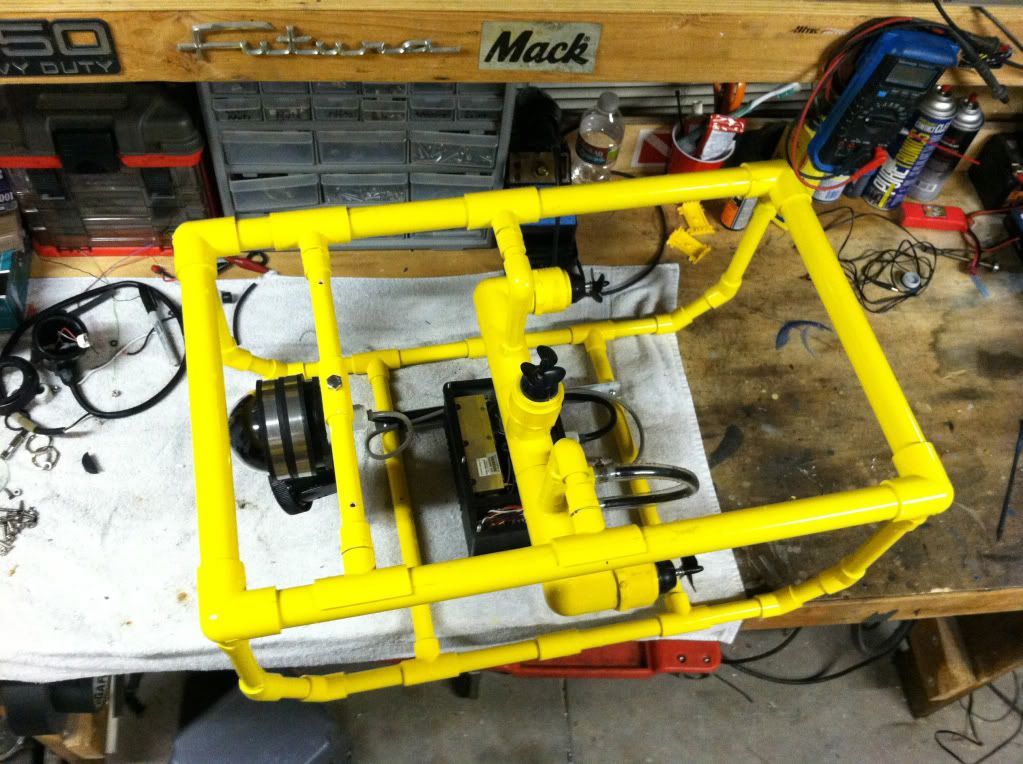
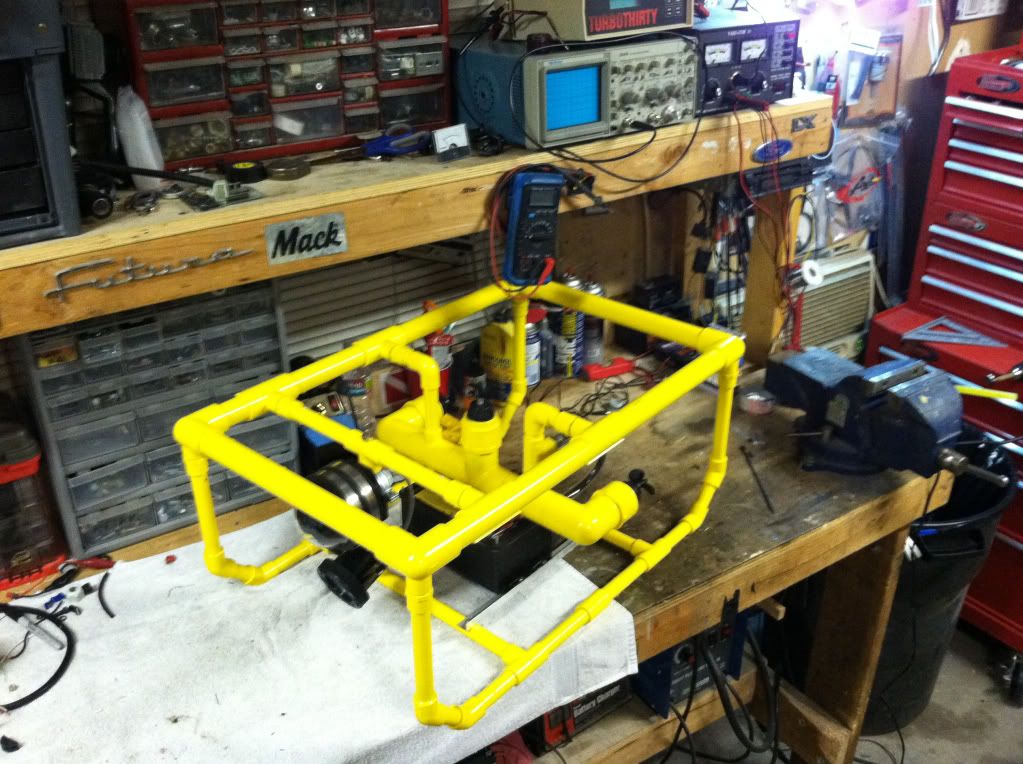
 The Camera housing is an ABS plumbing coupler, reinforced dome from the security camera's housing and a rubber plumbing coupler cut down to put it together. One thing that seems to be working great for sealing things, especially rubber things is Mercruiser Bellows Sealant. It's a super heavy duty rubber cement used to seal rubber component on boat engines.
